Is a NASA Space Camp Trip Worth It for Indian Students?
Quick answer: For students in grades 8 to 12 with a real interest in science, engineering or space, a Space Camp trip is usually worth it: it turns textbook physics into hands-on missions and teamwork, and many students come back with a new sense of what they want to study. It is a big commitment of time and money, so check what the itinerary actually includes, how students are supervised and whether visa support is part of the package.
“NASA Space Camp” is one of the most talked-about school trips in India. Parents hear about it from other families, and schools see it as a strong STEM experience. But the trip involves international flights, a US visa and time away from class, so it is fair to ask whether it is worth it. This guide explains what Space Camp actually is, what students do there, who gets the most out of it and what to check before you sign up.
What “NASA Space Camp” actually is
Space Camp is an educational camp in Huntsville, Alabama, on the grounds of the U.S. Space & Rocket Center. It was founded in 1982 to use the US space programme to get young people excited about science and maths.
The U.S. Space & Rocket Center is the official visitor center for NASA’s Marshall Space Flight Center, which sits next door. Marshall is where the rockets that took astronauts to the Moon were designed. So while NASA does not run Space Camp, the camp is closely tied to one of NASA’s most important centres, and students from more than 70 countries take part each year.
What students do at Space Camp
- Simulated missions to the International Space Station, the Moon or Mars, where students take on crew and mission-control roles.
- Astronaut training equipment, such as the 1/6th gravity chair, which simulates walking on the Moon, and the multi-axis trainer.
- Team engineering challenges, including building and launching rockets.
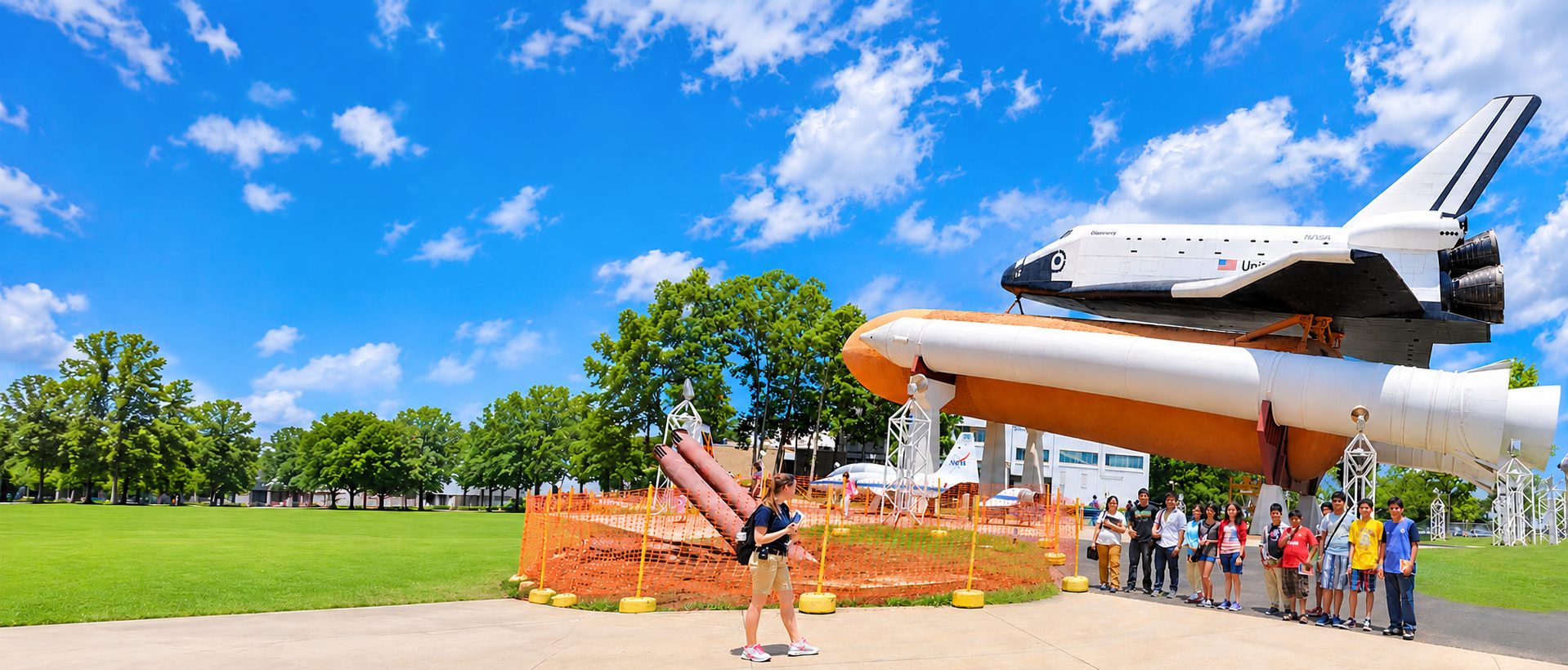
- Real space history in the Davidson Center for Space Exploration, home to a Saturn V moon rocket, and in Rocket Park outside.
Who gets the most out of it
- Students curious about STEM. The trip works best for students who already enjoy science, maths, coding or engineering, or who are starting to think about them as careers.
- Grades 8 to 12. Older students get more from the technical content and teamwork, and the trip can help with subject and career choices.
- Students ready to travel as a group. Ten days or more abroad builds independence, but students need to be comfortable away from home.
What students bring back
The biggest benefit is not a certificate. It is the moment science stops being abstract. Students who have “flown” a mission as a team, felt simulated lunar gravity and stood under a Saturn V tend to talk about physics and engineering differently afterwards. They also gain confidence from travelling abroad and working with students and instructors from other countries.
“Our students had the incredible opportunity to visit NASA as part of the educational trip organized by your team, and it proved to be one of the most inspiring learning experiences for them. … It encouraged them to think bigger, ask deeper questions, and develop a stronger interest in STEM subjects.”
Principal, Genesis Global School
What to weigh before you decide
- Cost. International flights, the camp and accommodation make this one of the more expensive school trips. Ask for a full costing so you can compare like for like.
- The US visa. Students need a US visitor visa, and interview waiting times in India can be long. Start early, and check whether visa support is included.
- Time away from school. Plan the trip around exams and the school calendar.
- Health requirements. Some simulators may need a doctor’s approval, so share any medical conditions when you book.
- Expectations. Space Camp is an inspiring educational experience, not a NASA internship or a guaranteed route into a space career.
Questions to ask any provider
- How many days are spent at Space Camp itself, and how much is sightseeing?
- Which Space Camp activities and simulators are included?
- Who travels with the group, what is the staff-to-student ratio and what are the emergency plans?
- Is US visa support included, and what does it cover?
- What does the price include: flights, meals, insurance, transfers?
Escapade India’s NASA Space Camp trip runs for 10 to 12 days for grades 8 to 12, with US visa support included.
Frequently asked questions
Is NASA Space Camp run by NASA?
No. Space Camp is run by the U.S. Space & Rocket Center in Huntsville, Alabama, which is the official visitor center for NASA’s Marshall Space Flight Center. The name “NASA Space Camp” is widely used in India, but NASA does not run the camp itself.
What age is Space Camp for?
Space Camp’s youth programs are for young people aged 9 to 18. Escapade India’s school trip is designed for students in grades 8 to 12.
Do Indian students need a visa for Space Camp?
Yes. Indian students need a US visitor visa. Start early, as interview waiting times in India can be long. Escapade India includes US visa support in its NASA Space Camp trip.
How long is a NASA Space Camp school trip?
It depends on the itinerary. Escapade India’s NASA Space Camp trip runs for 10 to 12 days.
Explore all our school trips, or read our guide to how IB CAS trips work.